
In a world where most people spend their lives chasing paychecks, Rich Dad Poor Dad by Robert Kiyosaki stands as a powerful wake-up call. It challenges conventional beliefs about money, work, and success—and offers a fresh perspective on how to build lasting wealth.
This bestselling personal finance classic doesn’t just teach you how to earn money—it teaches you how to make money work for you. Let’s explore the key lessons that make this book a must-read for anyone seeking financial independence.
🧠 Lesson 1: The Rich Don’t Work for Money
One of the most eye-opening ideas in the book is this:
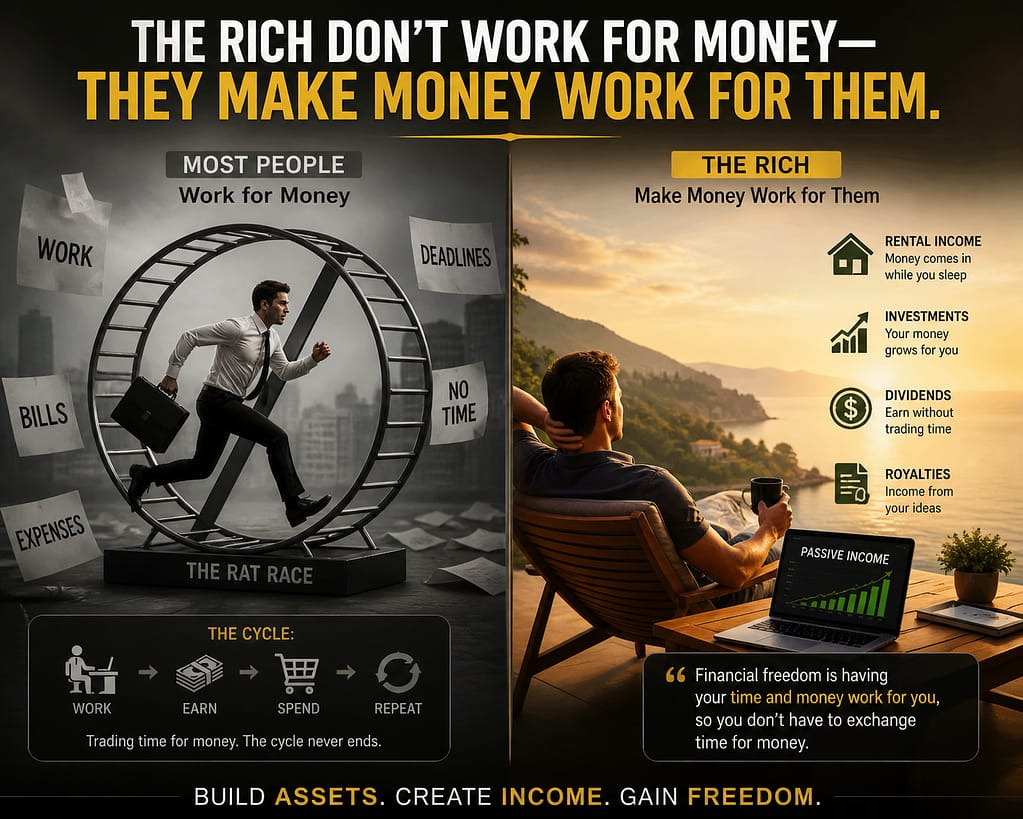
The rich don’t work for money—they make money work for them.
Most people are trapped in a cycle:
Work → Earn → Spend → Repeat
Kiyosaki calls this the “rat race.” The problem? Expenses rise with income, leaving little room for wealth creation.
The rich, on the other hand, focus on acquiring income-generating assets—investments that continue to produce money even when they’re not working.
📊 Lesson 2: Understand the Difference Between Assets and Liabilities
This is arguably the most important concept in the book:
- Assets put money in your pocket.
- Liabilities take money out of your pocket.
Sounds simple—but many people get it wrong.
For example:
- Buying a luxury car? Liability.
- Owning rental property that generates income? Asset.
Kiyosaki emphasizes:
“The rich buy assets. The poor only have expenses. The middle class buy liabilities they think are assets.”
The key to building wealth is consistently increasing your asset column while minimizing liabilities.
🎓 Lesson 3: Financial Education Is Crucial
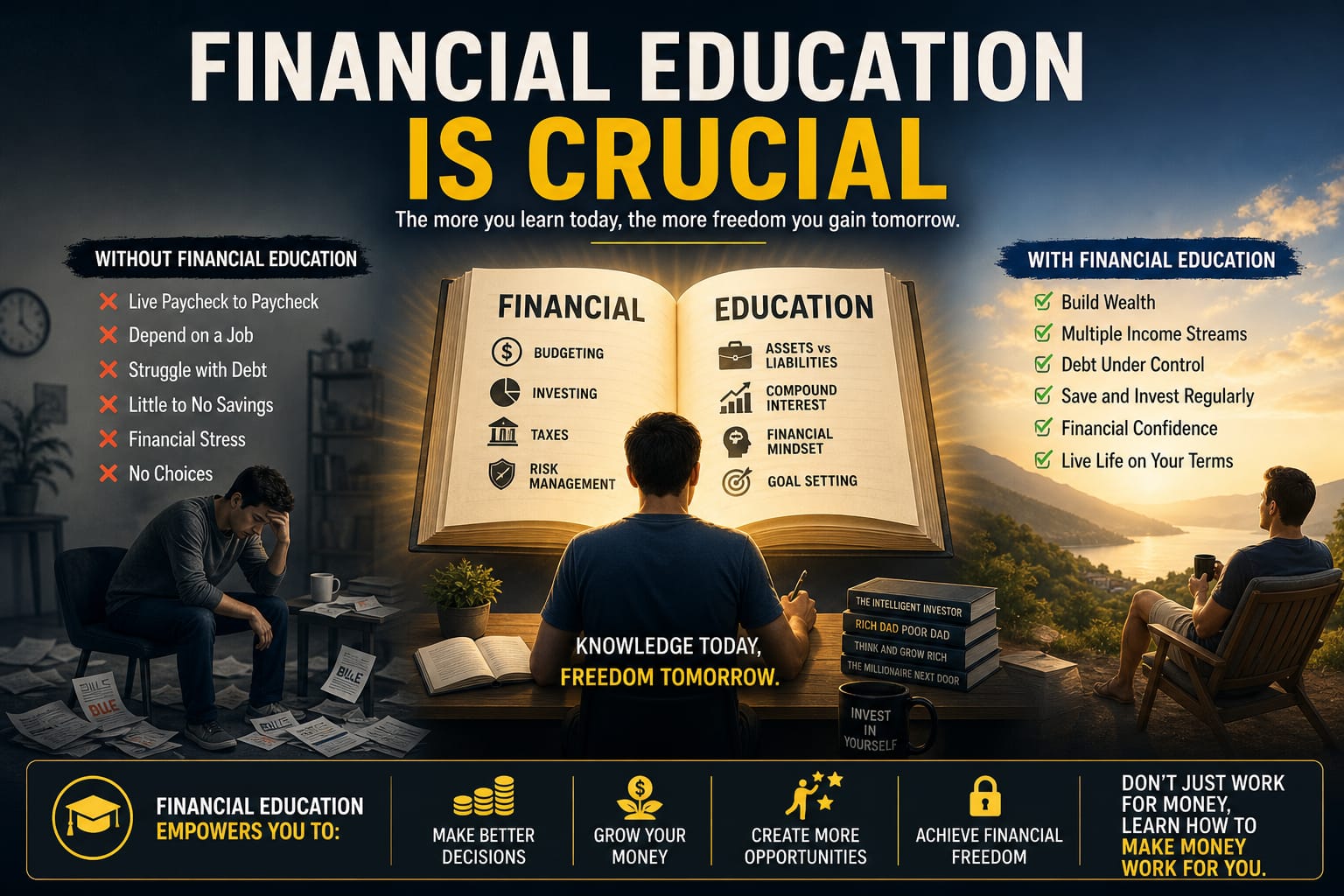
Traditional education teaches us how to work for money—but rarely how to manage it.
Kiyosaki argues that financial literacy is the missing link in most people’s lives. Understanding concepts like:
- Cash flow
- Investments
- Taxes
- Debt management
…can completely transform your financial future.
He encourages readers to take control of their learning, rather than relying solely on schools or employers.
🧩 Lesson 4: Mind Your Own Business
This doesn’t mean ignoring your job—it means building something beyond it.
Your profession is what you’re trained to do.
Your business is what generates wealth.
For example:
- A teacher can invest in stocks.
- An engineer can own rental properties.
Kiyosaki suggests focusing on your own business by building assets, even while working a full-time job.
⚡ Lesson 5: The Power of Passive Income
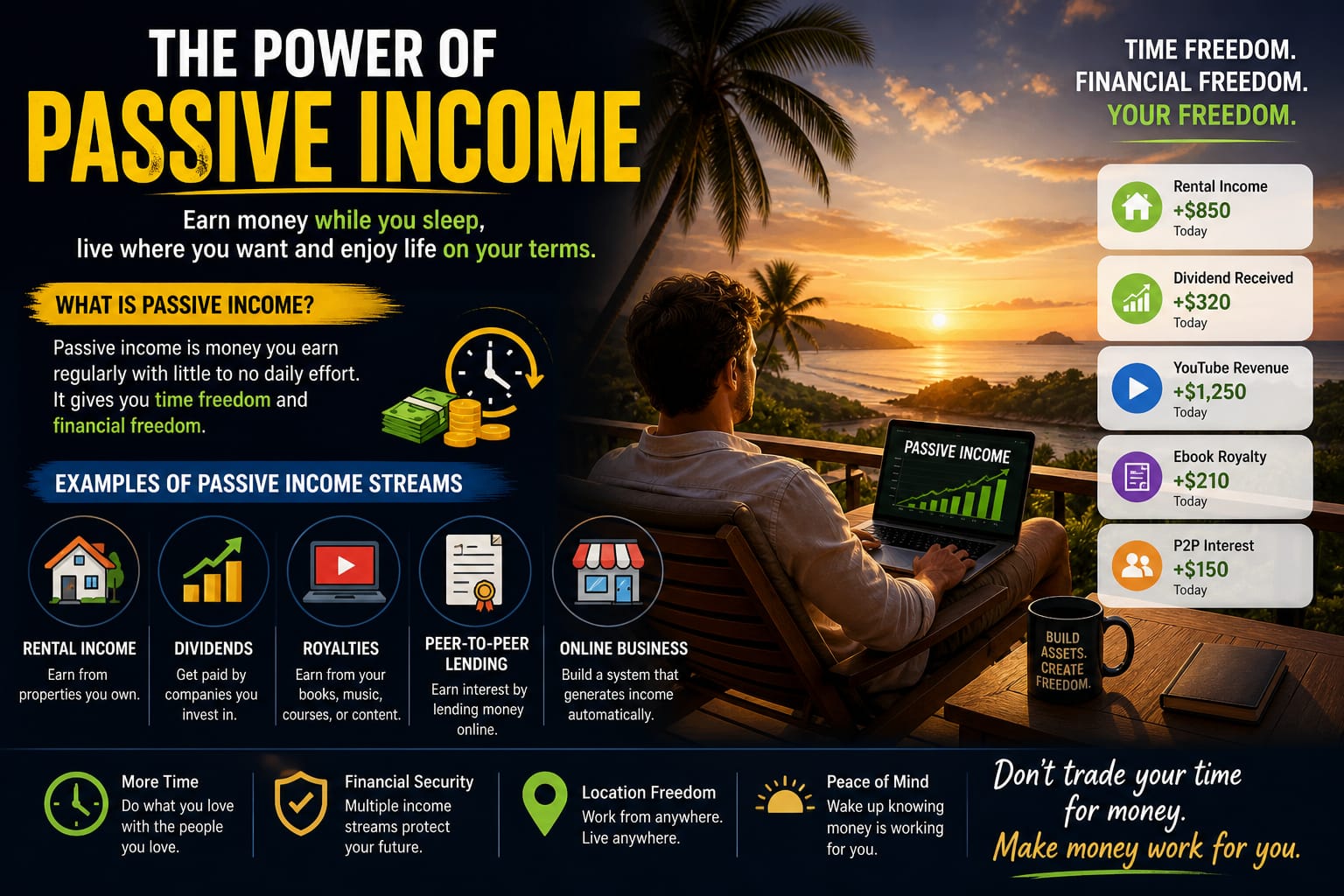
Imagine earning money while you sleep. That’s the idea behind passive income.
Examples include:
- Rental income
- Dividends from stocks
- Royalties from content
Passive income is the ultimate goal because it:
- Reduces dependence on a paycheck
- Creates financial security
- Offers freedom of time
The sooner you start building these streams, the closer you get to financial independence.
🚀 Lesson 6: Take Risks and Embrace Failure
Most people avoid financial risks due to fear:
- Fear of losing money
- Fear of making mistakes
- Fear of uncertainty
But Kiyosaki flips this idea:
“Winners are not afraid of losing. But losers are.”
The rich understand that failure is part of learning. Instead of playing it safe, they take calculated risks and learn from their experiences.
🔍 Lesson 7: Taxes and Corporations Work Differently for the Rich
Kiyosaki highlights a system many people overlook:
- Employees earn → pay taxes → spend what’s left
- Business owners earn → spend → pay taxes on what remains
By using corporations and smart financial strategies, the wealthy legally reduce their tax burden.
This doesn’t mean avoiding taxes—it means understanding how the system works and using it wisely.
🌱 Lesson 8: Your Mindset Shapes Your Wealth
Perhaps the most powerful takeaway from Rich Dad Poor Dad is this:
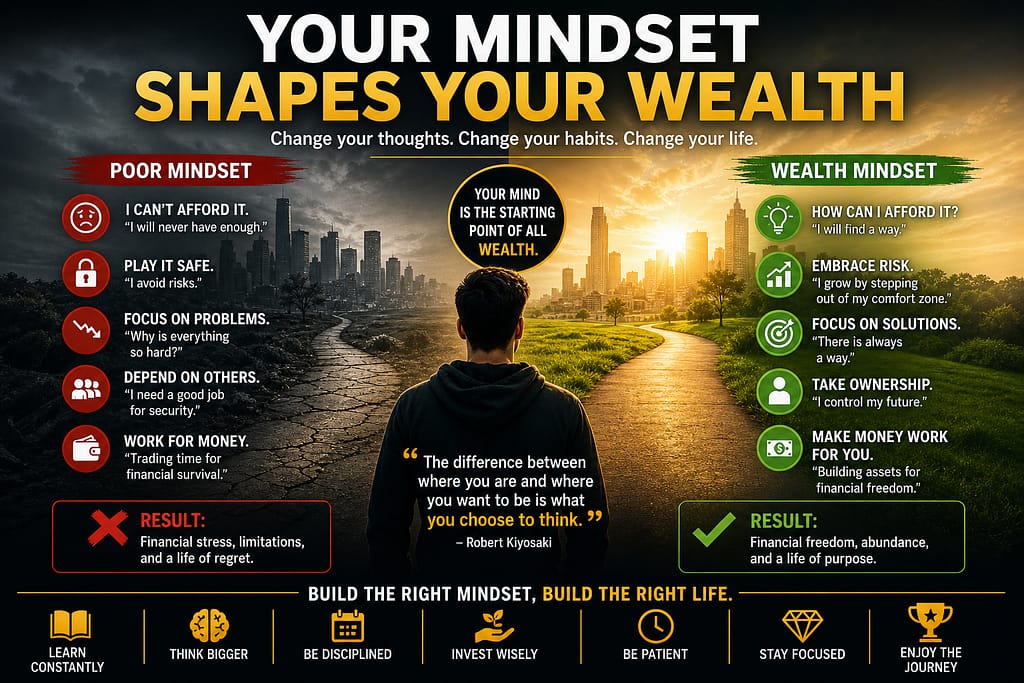
Your beliefs about money determine your financial reality.
Poor mindset:
- “I can’t afford it.”
- “Money is the root of all evil.”
Rich mindset:
- “How can I afford it?”
- “Money is a tool for freedom.”
Shifting your mindset opens the door to new opportunities and possibilities.
🏁 Final Thoughts: A Blueprint for Financial Freedom
Rich Dad Poor Dad isn’t just a book—it’s a mindset shift. It challenges you to rethink everything you’ve been taught about money and success.
Key takeaways:
- Focus on building assets, not just income
- Invest in financial education
- Create multiple income streams
- Take calculated risks
- Think differently about money
While some critics argue that the book oversimplifies certain concepts, its core message remains powerful:
Financial freedom is achievable—but only if you change how you think and act.
📌 Conclusion
If you’re tired of living paycheck to paycheck or want to take control of your financial future, Gulfrazinsights offers a clear starting point. It doesn’t promise overnight success—but it provides the tools and mindset needed to begin your journey toward wealth.
The real question is:
Will you keep working for money—or start making money work for you?