
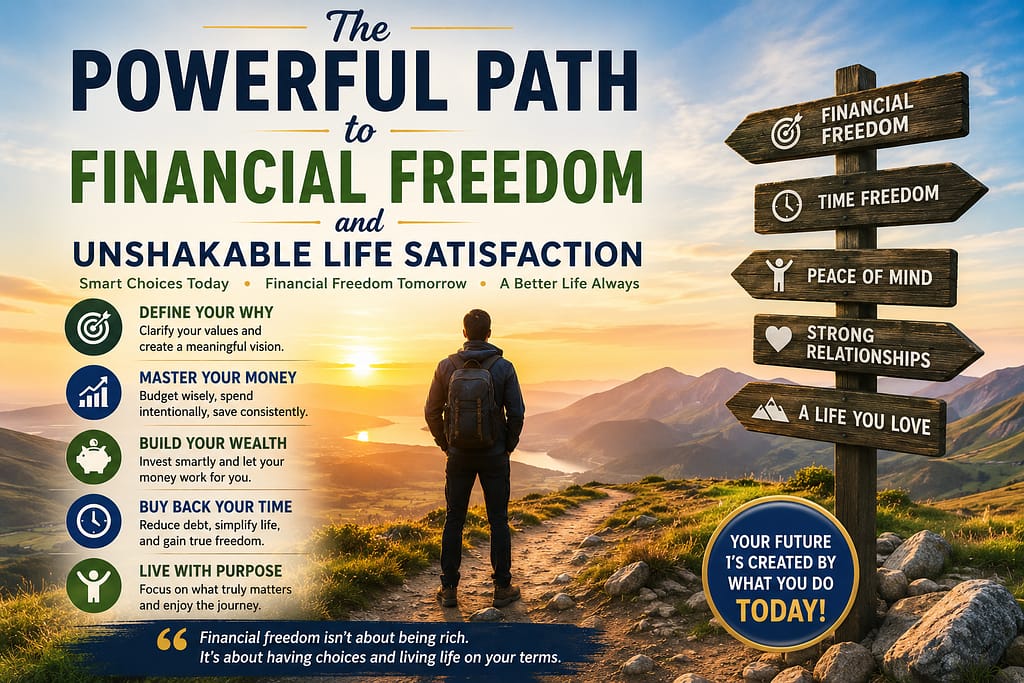
In a world where many people feel trapped by debt, endless bills, and the pressure to earn more money, Your Money or Your Life offers a refreshing and transformative perspective. First published in 1992 and updated for modern readers, this personal finance classic challenges conventional beliefs about money and introduces a path toward financial independence and a more meaningful life.
Unlike many financial books that focus solely on investing or budgeting, Your Money or Your Life explores the deeper relationship between money, time, and personal fulfillment. The authors argue that financial freedom is not about becoming rich overnight—it is about aligning your spending with your values and creating a life that truly matters.
What Is Your Money or Your Life About?
At its core, Your Money or Your Life asks a powerful question:
How much of your life energy are you exchanging for money
Every dollar you earn represents time, effort, skills, and energy invested in your work. When viewed this way, money becomes more than numbers in a bank account—it becomes a representation of your life itself.
The book encourages readers to examine whether their spending habits bring genuine happiness and fulfillment or simply support a cycle of earning and consuming.
This shift in perspective forms the foundation of the book’s approach to financial independence.
Understanding the Concept of Life Energy

One of the book’s most influential ideas is the concept of life energy.
Most people think about purchases in terms of dollars. However, the authors suggest calculating how many hours of work are required to earn the money needed for a purchase.
For example, if a person earns $25 per hour and buys a $250 item, that purchase costs approximately ten hours of life energy.
This simple exercise can dramatically change spending decisions. Many purchases that seem reasonable suddenly appear less valuable when measured against the time required to earn them.
Key Lesson:
Before buying something, ask whether it is worth the amount of life energy you exchanged to obtain it.
Tracking Every Dollar
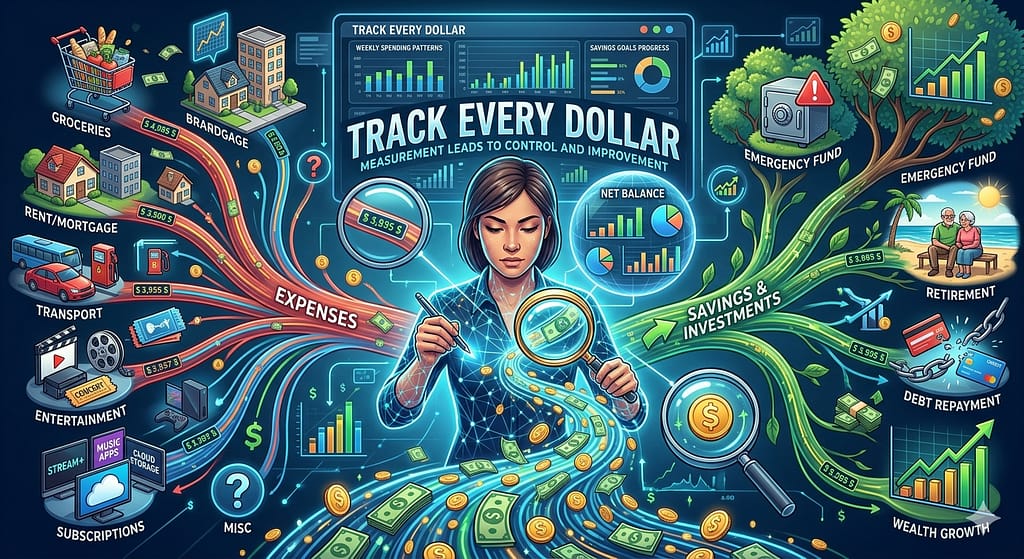
A central practice in Your Money or Your Life is tracking income and expenses.
The authors encourage readers to record every dollar that comes into and goes out of their lives. While this may seem tedious at first, it creates awareness and helps identify spending patterns.
Many people underestimate how much they spend on small, recurring expenses. By tracking every transaction, readers gain a clear picture of where their money is going and whether those expenditures align with their values.
This process is not about restricting yourself—it is about becoming conscious of your financial choices.
Key Lesson:
Awareness is the first step toward financial freedom.
Evaluating Spending Based on Fulfillment

One of the most unique aspects of the book is its emphasis on evaluating spending according to the level of satisfaction it provides.
The authors suggest asking:
- Did this purchase add value to my life?
- Was it worth the life energy I spent earning it?
- Would I make the same purchase again?
This practice helps people identify expenses that bring genuine happiness while eliminating spending that provides little long-term benefit.
Over time, readers learn to spend intentionally rather than impulsively.
Key Lesson:
Spend money on what truly improves your life and eliminate unnecessary expenses.
Achieving Financial Independence
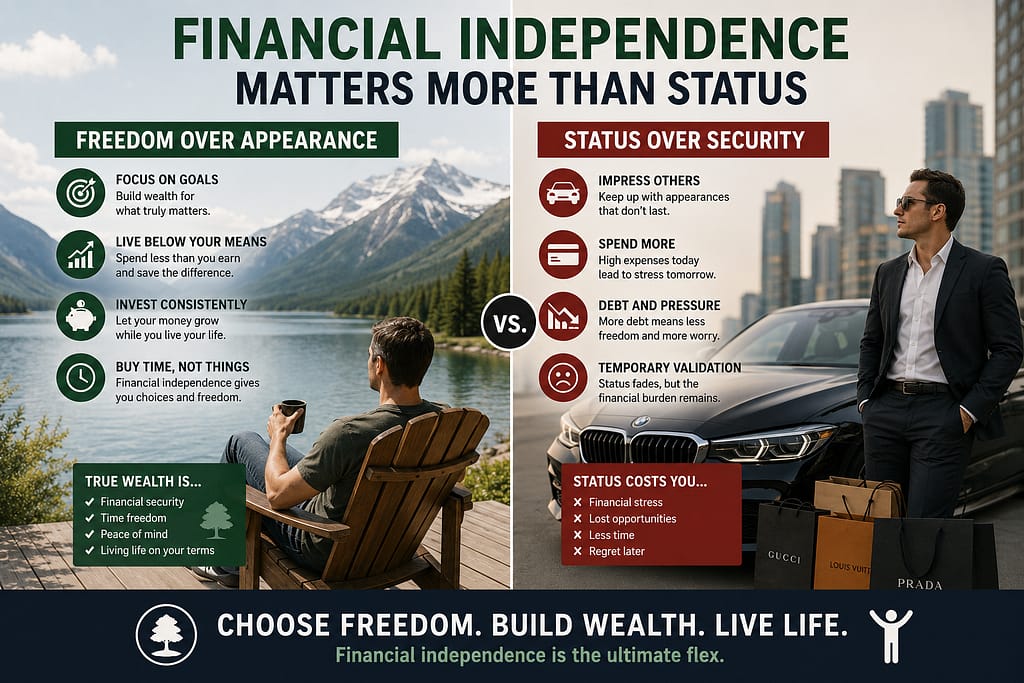
Financial independence is one of the book’s primary goals.
According to Robin and Dominguez, financial independence occurs when income generated by investments and assets is sufficient to cover living expenses.
The journey begins by reducing unnecessary spending and increasing savings. Those savings can then be invested to generate passive income over time.
The authors emphasize that financial independence is not about extreme sacrifice. Instead, it is about creating a lifestyle that requires less money while providing greater satisfaction.
Key Lesson:
Financial independence comes from controlling expenses and growing investments, not simply earning more income.
Escaping the Consumer Culture

Modern society often encourages people to buy more, upgrade constantly, and measure success through material possessions.
Your Money or Your Life challenges this mindset.
The authors argue that excessive consumption often leads to stress, debt, and dissatisfaction rather than happiness. Many people spend years working longer hours to afford items that provide only temporary pleasure.
By focusing on meaningful experiences, relationships, personal growth, and financial security, readers can escape the cycle of consumerism and build a more fulfilling life.
Key Lesson:
True wealth is not having more possessions—it is having more freedom and purpose.
The Importance of Saving and Investing

While the book focuses heavily on mindset, it also provides practical financial guidance.
Robin and Dominguez encourage readers to:
- Save consistently.
- Reduce wasteful spending.
- Build an emergency fund.
- Invest for long-term growth.
- Create multiple sources of income.
These habits allow money to work for you rather than forcing you to work endlessly for money.
The authors highlight the power of compound growth and patient investing, showing how small, consistent actions can produce significant results over time.
Key Lesson:
Long-term financial success is built through consistency, not quick wins.
Why the Book Remains Relevant Today
Although Your Money or Your Life was first published decades ago, its lessons are arguably more important than ever.
Today’s consumers face constant advertising, social media comparisons, and pressure to maintain lifestyles that may not align with their financial reality.
The book provides an antidote to these challenges by encouraging intentional living and conscious spending.
Its principles are especially valuable for people interested in:
- Financial independence.
- Early retirement.
- Minimalism.
- Sustainable living.
- Debt reduction.
- Mindful spending.
The book’s message resonates with readers who want more control over their time and financial future.
Key Takeaways from Your Money or Your Life
Here are some of the most important lessons from the book:
- Money represents life energy.
- Track every dollar you earn and spend.
- Evaluate purchases based on fulfillment.
- Reduce spending that does not add value.
- Save and invest consistently.
- Focus on financial independence rather than status.
- Align your finances with your personal values.
- Prioritize freedom, purpose, and meaningful experiences.
Final Thoughts
Your Money or Your Life is much more than a personal finance book—it is a guide to living intentionally. Vicki Robin and Joe Dominguez challenge readers to rethink their relationship with money and consider how financial decisions affect overall happiness and life satisfaction.
The book teaches that financial freedom is not achieved by chasing endless income or accumulating more possessions. Instead, it comes from understanding the true value of money, spending consciously, and aligning your finances with your deepest values.
For anyone seeking financial independence, greater purpose, and a healthier relationship with money, Your Money or Your Life remains one of the most influential and life-changing books ever written.