
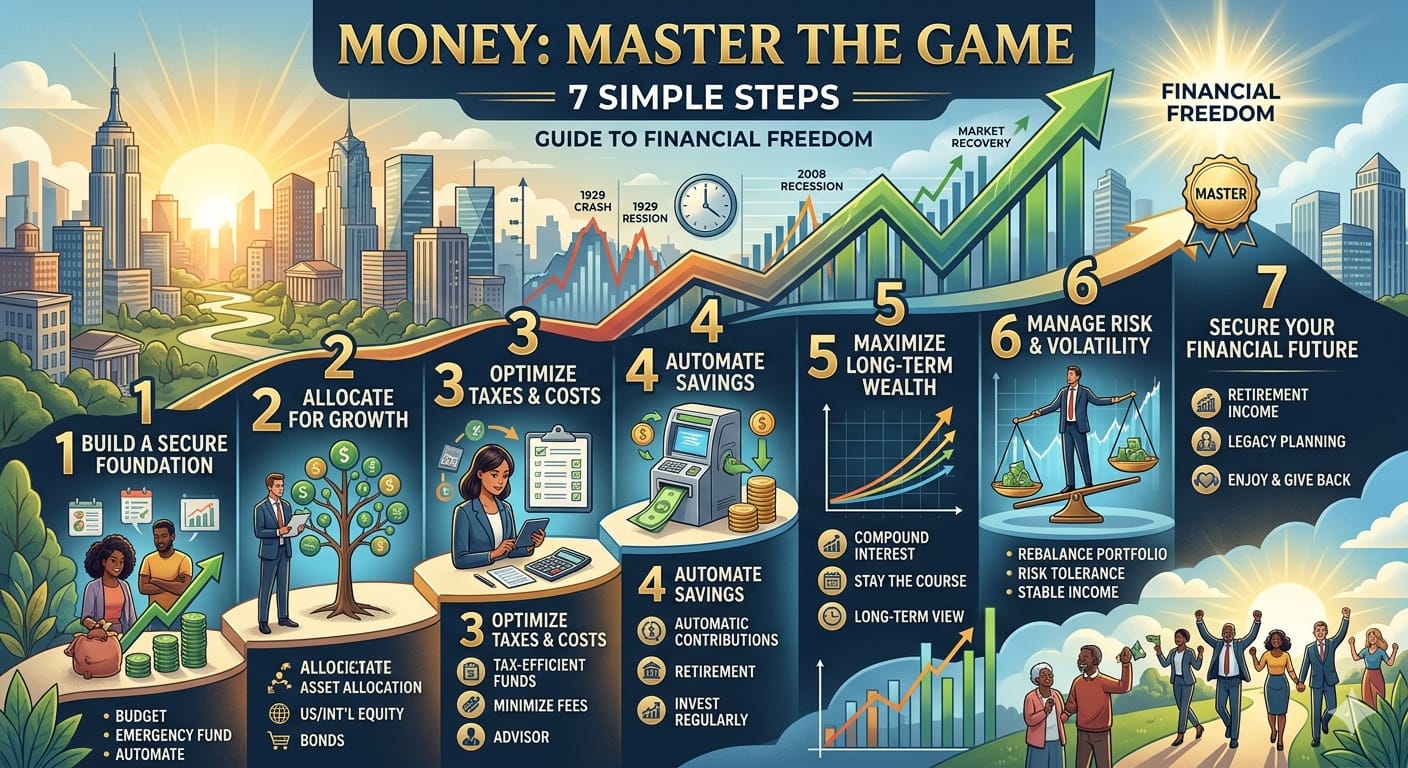
Achieving financial freedom is a goal shared by millions of people around the world. Yet many individuals feel overwhelmed by investing, retirement planning, and wealth-building strategies. Financial jargon, market volatility, and conflicting advice often make the journey seem complicated.
In Money: Master the Game – 7 Simple Steps to Financial Freedom, renowned life and business strategist Tony Robbins (also known as Anthony Robbins) simplifies the path to financial success. Drawing insights from some of the world’s greatest investors and financial experts, Robbins provides a practical blueprint for building wealth, protecting assets, and creating long-term financial security.
This comprehensive guide offers valuable lessons for beginners and experienced investors alike. Let’s explore the key ideas behind the book and the seven simple steps that can help you move closer to financial freedom.
Why Money: Master the Game Stands Out
Unlike many finance books that focus solely on investing techniques, Robbins combines financial strategies with mindset principles. He emphasizes that financial success is not reserved for the wealthy or highly educated. Instead, it comes from consistent habits, smart decision-making, and a long-term perspective.
The book is based on extensive interviews with legendary investors, including Warren Buffett, Ray Dalio, and other financial experts who have successfully navigated different market conditions.
Robbins distills their wisdom into actionable steps that ordinary investors can apply in their daily lives.
Step 1: Make the Decision to Become an Investor

The first step toward financial freedom is making a firm commitment to take control of your financial future.
Many people spend years postponing investing because they believe they need large amounts of money to get started. Robbins challenges this misconception by showing that small, consistent contributions can grow significantly over time through the power of compound interest.
The most important action is simply getting started.
Whether it’s investing $50 or $500 per month, consistency matters far more than timing the market perfectly.
Step 2: Know the Rules Before You Play

One of the central themes of the book is financial education.
Robbins argues that many people enter the financial world without understanding how it operates. As a result, they may pay excessive fees, choose unsuitable investments, or fall victim to poor financial advice.
He encourages readers to learn:
- How investment fees affect returns
- The difference between active and passive investing
- The basics of retirement accounts
- The importance of diversification
- How taxes impact investment growth
Financial literacy empowers investors to make informed decisions and avoid costly mistakes.
Step 3: Create a Financial Freedom Plan
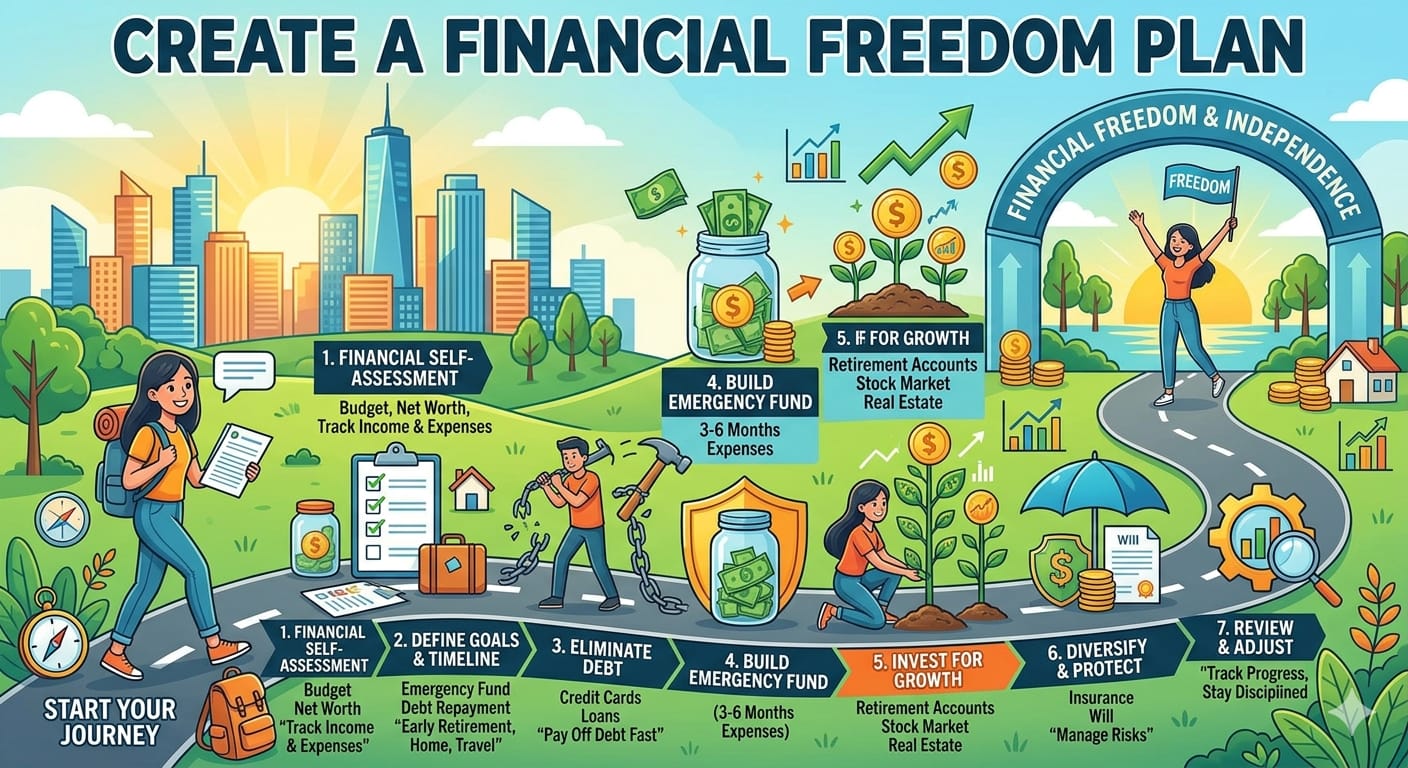
Every successful journey begins with a destination.
Robbins encourages readers to clearly define their financial goals and calculate how much money they will need to achieve them.
This includes identifying:
- Retirement income needs
- Major life expenses
- Emergency savings targets
- Investment goals
Once your objectives are clear, you can develop a strategy that aligns with your desired lifestyle.
A written financial plan provides direction and helps maintain focus during market ups and downs.
Step 4: Understand the Most Important Investment Decision

According to Robbins, asset allocation is one of the most critical factors influencing long-term investment performance.
Asset allocation refers to how investments are divided among different categories such as:
- Stocks
- Bonds
- Cash
- Alternative investments
A properly diversified portfolio can help reduce risk while maximizing potential returns.
Rather than trying to predict which individual stock will perform best, successful investors focus on building balanced portfolios that can withstand various market conditions.
This approach helps create more stable and predictable long-term results.
Step 5: Build a Diversified Portfolio
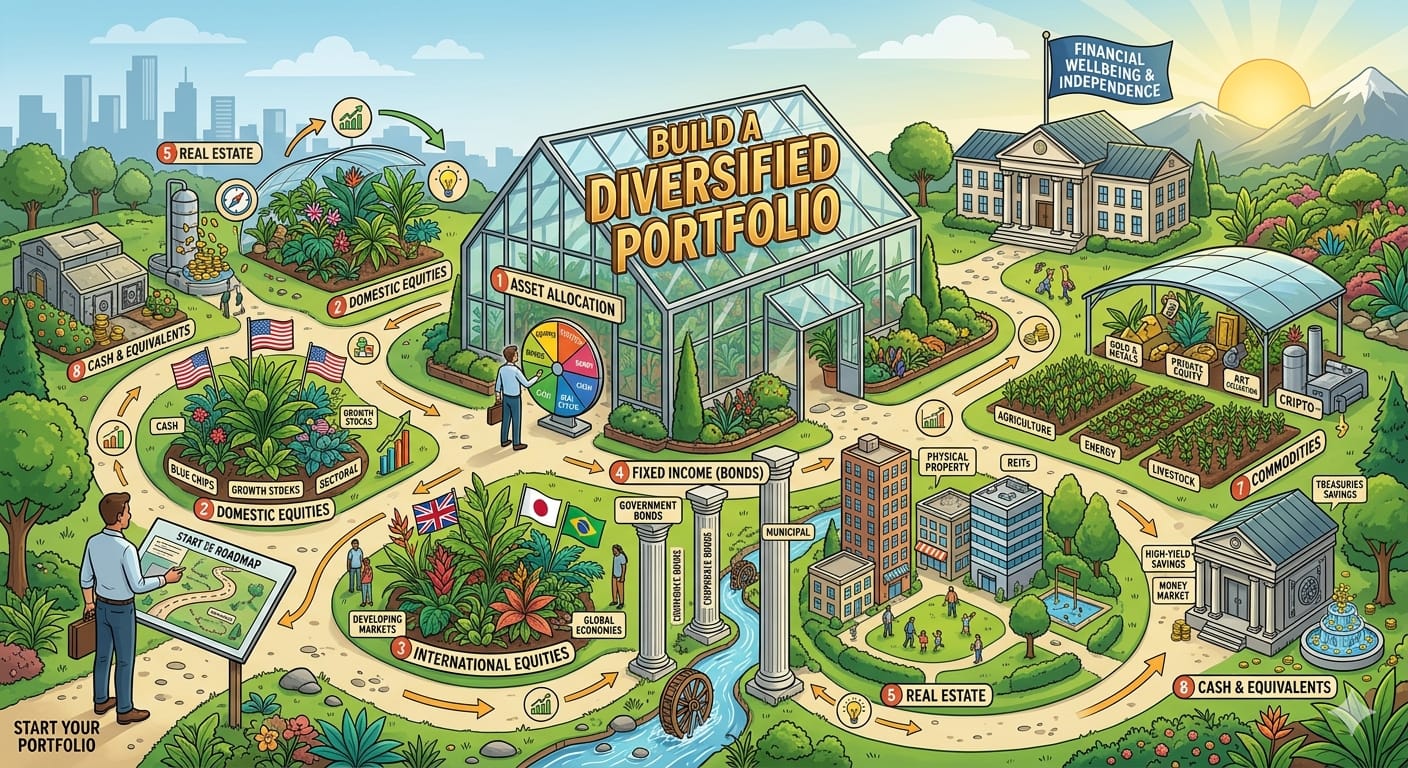
One lesson repeated throughout the book is the importance of diversification.
Diversification helps protect investors from significant losses by spreading risk across multiple investments.
Robbins highlights how many wealthy investors avoid concentrating all their assets in a single company, industry, or asset class.
Benefits of diversification include:
- Reduced portfolio volatility
- Better risk management
- Increased long-term consistency
- Greater resilience during market downturns
A diversified portfolio may not generate the highest short-term gains, but it often delivers stronger long-term outcomes.
Step 6: Learn from the World’s Best Investors

One of the most valuable sections of Money: Master the Game features insights from some of the greatest investors of all time.
Despite their different investment styles, many successful investors share common principles:
- Think long term
- Stay disciplined
- Avoid emotional decisions
- Focus on value
- Maintain diversification
- Control costs
These experts understand that investing is not about predicting short-term market movements. Instead, it is about following a consistent strategy over many years.
Robbins encourages readers to adopt these habits and avoid the temptation to chase trends or react to market headlines.
Step 7: Create Lifetime Income and Financial Security

The final step focuses on turning accumulated wealth into sustainable income.
Building wealth is only part of the equation. Investors must also develop strategies to preserve and distribute their assets during retirement.
Robbins discusses various approaches to creating reliable income streams, including:
- Dividend-paying investments
- Bonds
- Annuities
- Strategic withdrawal plans
The goal is to ensure that your money continues working for you long after your active working years have ended.
Financial freedom means having enough resources to support your desired lifestyle without depending entirely on employment income.
Key Lessons from Money: Master the Game
The book delivers several timeless lessons that apply to investors at every stage:
Start Early
Time is one of the most powerful wealth-building tools. The earlier you begin investing, the greater the benefits of compound growth.
Control What You Can
Investors cannot control market performance, but they can control:
- Savings rates
- Investment costs
- Asset allocation
- Emotional reactions
Focusing on controllable factors improves long-term outcomes.
Think Long Term
Successful investing is a marathon, not a sprint. Patience and consistency often outperform frequent trading and speculation.
Never Stop Learning
Financial markets evolve constantly. Continuous education helps investors make smarter decisions and adapt to changing conditions.
Final Thoughts
Money: Master the Game by Tony Robbins offers a powerful roadmap for achieving financial freedom. By combining practical investment strategies with proven success principles, Robbins transforms complex financial concepts into actionable steps that anyone can follow.
The book’s greatest strength lies in its simplicity. Rather than promoting risky shortcuts or get-rich-quick schemes, it emphasizes education, discipline, diversification, and long-term thinking.
Whether you’re just starting your financial journey or looking to strengthen your existing investment strategy, the seven simple steps outlined in this book provide a solid foundation for building lasting wealth and achieving greater financial independence.
Financial freedom is not a matter of luck. It is the result of informed decisions, consistent action, and a commitment to mastering the game of money.