
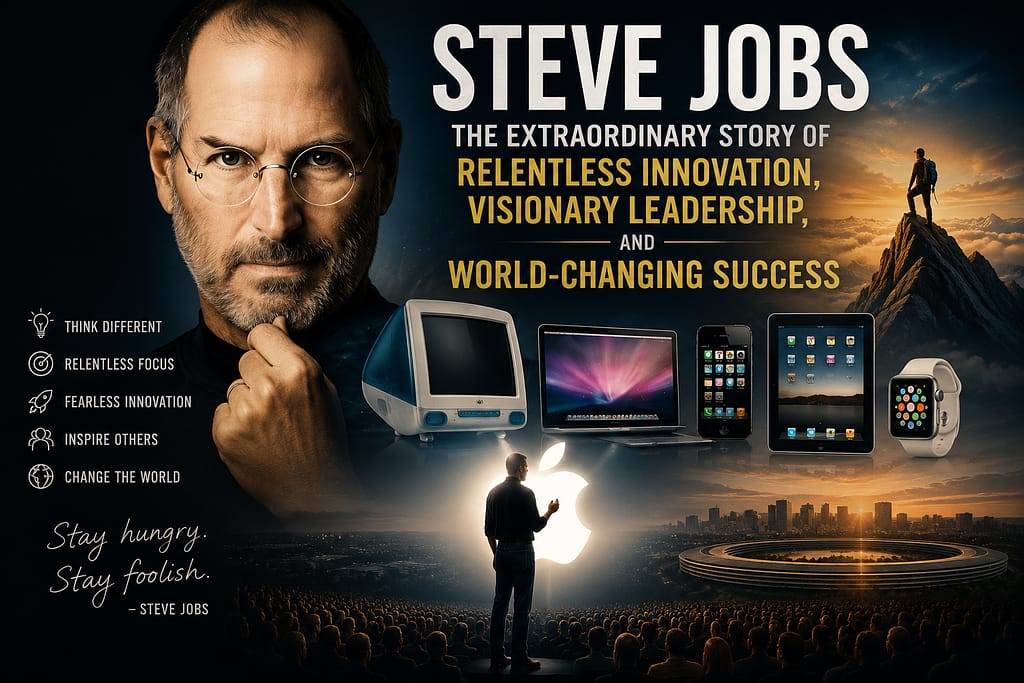
Few individuals have transformed the world as profoundly as Steve Jobs. His relentless pursuit of excellence, groundbreaking innovations, and unique leadership style helped reshape industries ranging from personal computing to music, smartphones, and digital entertainment.
In Steve Jobs, acclaimed biographer Walter Isaacson delivers a compelling and detailed account of one of the most influential figures in modern history. Based on dozens of interviews with Jobs, his family, colleagues, friends, and competitors, the biography provides an honest and fascinating look at the man behind some of the world’s most revolutionary products.
Whether you’re an entrepreneur, business leader, student, or technology enthusiast, this book offers valuable lessons on creativity, innovation, leadership, and perseverance.
About the Book
Published shortly after Jobs’ death in 2011, Steve Jobs is the only biography written with his full cooperation.
Isaacson spent more than two years conducting extensive interviews with Jobs and over one hundred people who played important roles in his life. The result is a deeply personal portrait that explores both his extraordinary achievements and his complex personality.
Rather than presenting Jobs as a flawless hero, Isaacson highlights his strengths, weaknesses, successes, and failures, creating a balanced and authentic story.
The book follows Jobs from his childhood through his rise as a technology pioneer and his lasting impact on the world.
The Early Years: Curiosity and Creativity
One of the most fascinating aspects of the biography is Jobs’ early life.
Raised in Cupertino, Jobs developed an interest in electronics, design, and creativity from a young age. His adoptive father taught him the importance of craftsmanship, a lesson that would later influence his obsession with product design.
The book shows how Jobs’ curiosity and willingness to challenge conventional thinking became defining traits throughout his life.
Even as a teenager, he displayed an unusual ability to combine technology with creativity—a skill that would eventually set him apart from many of his competitors.
Founding Apple: A Revolution Begins
One of the most significant chapters in the book focuses on the creation of Apple.
Alongside Steve Wozniak, Jobs launched the company from a garage and helped spark the personal computer revolution.
The release of products such as the Apple II and later the Macintosh demonstrated Jobs’ vision of making technology accessible and user-friendly.
Unlike many engineers of his time, Jobs believed technology should not only work well but also look beautiful and provide an exceptional user experience.
This philosophy became a cornerstone of Apple’s success and remains influential today.
The Reality Distortion Field
One of the most famous concepts discussed in the book is Jobs’ “Reality Distortion Field.”
Colleagues often described his ability to convince people that seemingly impossible goals could be achieved.
Jobs pushed teams beyond what they believed were their limits, demanding excellence in every detail.
While this approach often led to groundbreaking innovations, it also created tension and conflict. Isaacson does not shy away from discussing Jobs’ difficult personality traits, including his impatience, perfectionism, and sometimes harsh management style.
The biography demonstrates that extraordinary success often comes with significant personal and professional challenges.
The Fall and Return
One of the most dramatic parts of the story involves Jobs’ departure from Apple in 1985.
After internal conflicts, he was forced out of the company he helped create. For many entrepreneurs, such a setback would have marked the end of their career.
Instead, Jobs used this period to launch new ventures, including NeXT and his investment in Pixar Animation Studios.
Pixar went on to revolutionize animated filmmaking with movies like Toy Story, while NeXT developed technologies that later became important to Apple’s future.
The book highlights an important lesson: failure is often a stepping stone to greater success.
Jobs’ return to Apple in 1997 ultimately became one of the greatest corporate comebacks in history.
The Products That Changed the World
Isaacson dedicates significant attention to the products that defined Jobs’ legacy.
Under his leadership, Apple introduced:
- iMac
- iPod
- iPhone
- iPad
Each product disrupted existing industries and set new standards for design and functionality.
Jobs believed that innovation occurs at the intersection of technology and the humanities. By combining engineering, design, and storytelling, he created products that people genuinely loved to use.
The book reveals how much attention Jobs devoted to even the smallest details, from packaging design to user interfaces.
Leadership Lessons from Steve Jobs
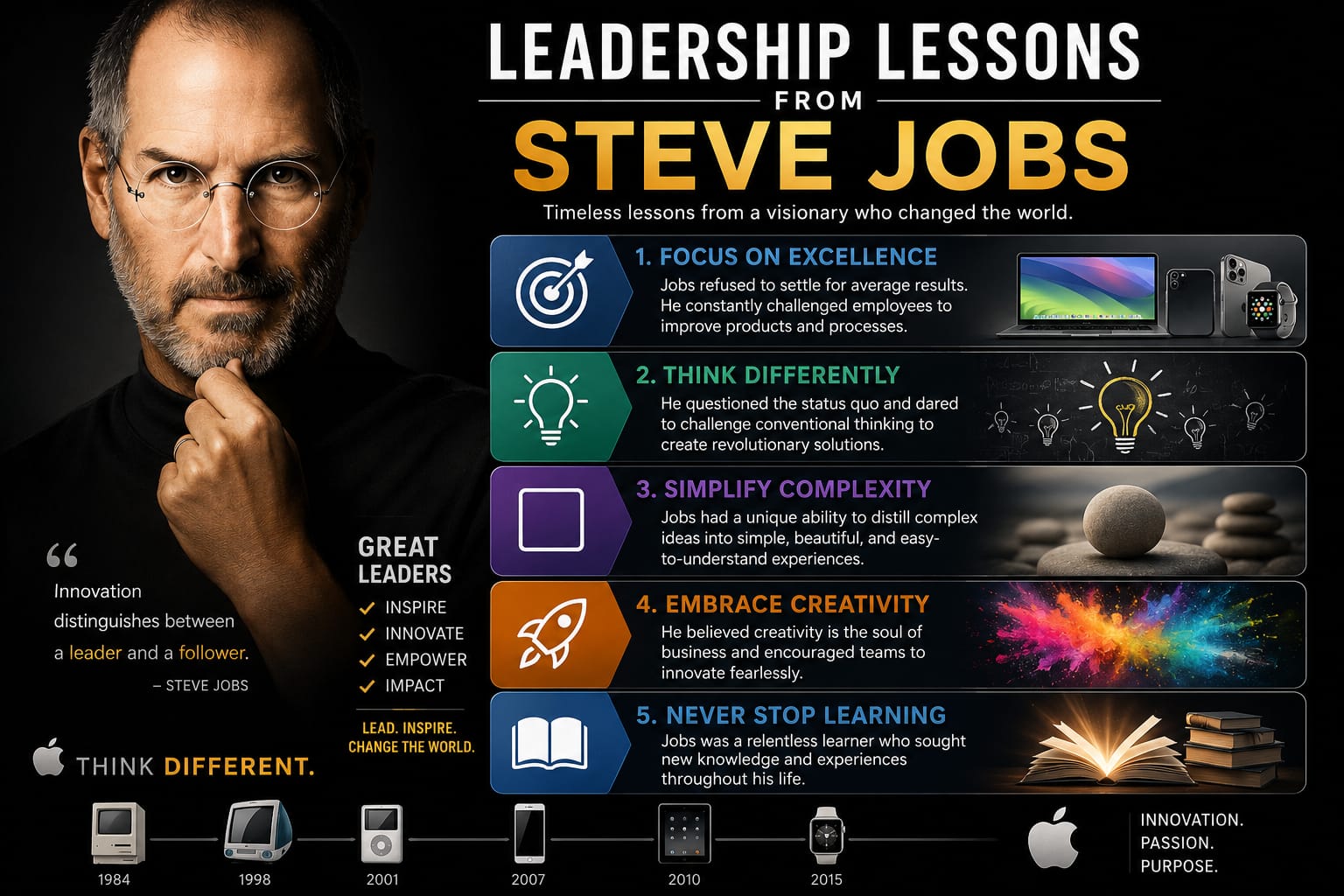
One reason the biography remains so popular is the wealth of leadership lessons it contains.
Focus on Excellence
Jobs refused to settle for average results. He constantly challenged employees to improve products and processes.
Think Differently
Innovation often comes from questioning assumptions and exploring unconventional ideas.
Simplify Complexity
Many of Apple’s most successful products became popular because they made complicated technology simple and intuitive.
Embrace Creativity
Jobs believed creativity was one of the most valuable business assets. He encouraged experimentation and bold thinking.
Never Stop Learning
Throughout his life, Jobs drew inspiration from art, design, literature, spirituality, and technology.
His willingness to learn from diverse disciplines helped shape his unique perspective.
The Human Side of Steve Jobs
Perhaps the most powerful aspect of Isaacson’s biography is its honesty.
The book does not present Jobs as perfect. Instead, it portrays him as a deeply human figure with strengths and flaws.
Readers learn about his relationships, health struggles, personal growth, and evolving views on family and leadership.
This balanced portrayal makes his achievements even more impressive because they were accomplished despite significant personal challenges.
The biography reminds readers that greatness often comes from embracing imperfections while striving for continuous improvement.
Why This Book Remains Relevant
More than a decade after its publication, Steve Jobs continues to inspire readers worldwide.
Its lessons apply far beyond technology. Entrepreneurs, business leaders, students, creatives, and professionals can all learn from Jobs’ commitment to innovation, passion, and excellence.
The book demonstrates that success is not simply about intelligence or talent. It is about vision, persistence, courage, and the willingness to challenge the status quo.
Final Thoughts
Steve Jobs by Walter Isaacson is far more than a biography. It is a masterclass in innovation, leadership, creativity, and resilience.
Through detailed storytelling and honest analysis, Isaacson captures the complexity of a man who changed the way people communicate, work, and interact with technology.
For anyone interested in entrepreneurship, business success, personal growth, or technological innovation, this book offers valuable insights and lasting inspiration.
Steve Jobs’ legacy continues to influence the world today, and Isaacson’s biography remains one of the most compelling accounts of a visionary who dared to think differently and, in doing so, changed the future.