
In the complex landscape of modern geopolitics, Iran has emerged as a state whose military strategy defies conventional expectations. Rather than attempting to match global powers like the United States or regional rivals such as Israel in traditional warfare, Iran has developed a unique and adaptive doctrine centered on asymmetric warfare. This strategy, shaped by historical experience, economic constraints, and ideological priorities, allows Iran to project influence, deter adversaries, and ensure regime survival despite significant military disadvantages.
Historical Roots of Iran’s Strategy
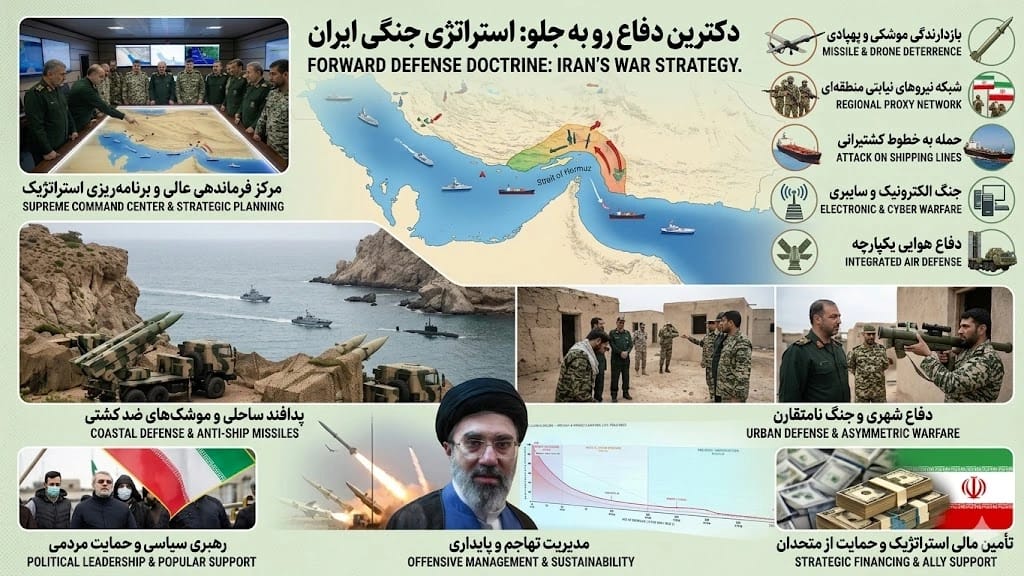
Iran’s contemporary war strategy is deeply rooted in the aftermath of the 1979 Islamic Revolution and the Iran-Iraq War (1980–1988). During this period, Iran faced a technologically superior Iraqi military backed by Western powers. The war exposed the limitations of conventional military capabilities and pushed Iranian leaders to rethink their approach to conflict.
As a result, Iran began investing in unconventional tactics that could offset its weaknesses. This shift laid the foundation for a long-term doctrine focused on resilience, adaptability, and indirect confrontation. The creation and empowerment of the IRGC became central to this transformation, as it was tasked not only with defending the country(rcsgs.org)
The Core Principle: Asymmetric Warfare
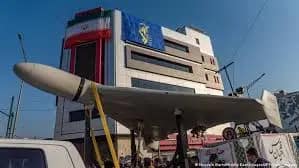
At the heart of Iran’s military doctrine lies asymmetric warfare. This approach involves exploiting the vulnerabilities of stronger adversaries rather than engaging them in direct, large-scale battles. Instead of relying on advanced fighter jets or large naval fleets, Iran emphasizes cost-effective and difficult-to-counter tools such as missiles, drones, cyber operations, and irregular forces.
Iran’s missile arsenal and unmanned aerial systems have become key components of this strategy. These weapons are relatively inexpensive compared to Western military systems but can inflict significant damage and create strategic uncertainty. (Iran Watch) Recent conflicts have demonstrated how mass-produced drones can overwhelm sophisticated air defense systems, highlighting the effectiveness of this approach. (Business Insider)
Additionally, Iran has developed underground and dispersed military infrastructure to ensure survivability in the event of airstrikes. This makes it difficult for adversaries to eliminate its capabilities in a single decisive blow.
The “Mosaic Defense” Concept
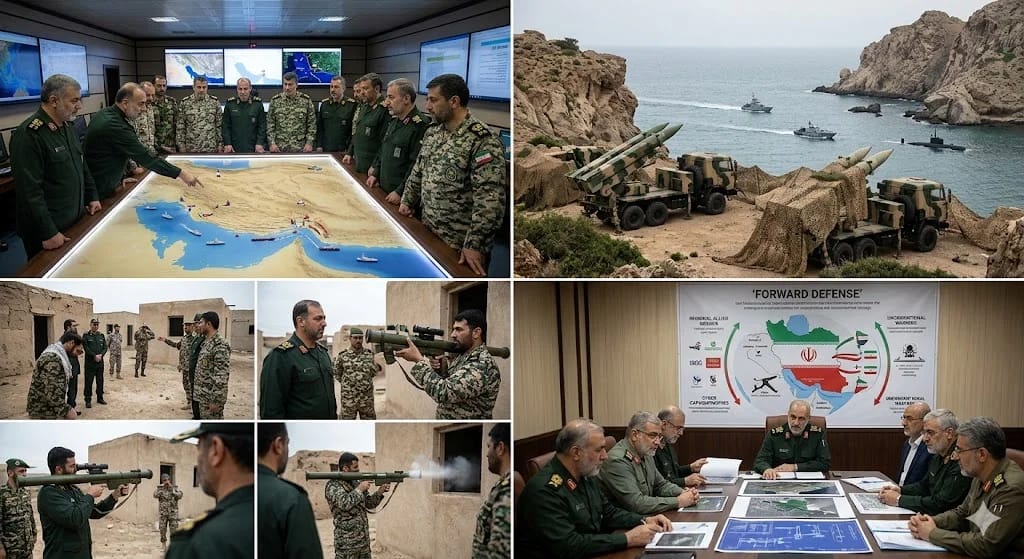
One of the most distinctive features of Iran’s war strategy is its decentralized command structure, often referred to as the “mosaic defense.” Rather than concentrating military power in a single chain of command, Iran distributes authority across multiple semi-independent units.
This structure enhances resilience by ensuring that even if key القيادة figures or facilities are destroyed, the overall system can continue functioning. It also complicates enemy planning, as there is no single point of failure that can cripple Iran’s defense.
The mosaic approach transforms Iran into a layered battlefield, combining regular military forces with irregular units, local militias, and long-term attritional tactics. (Al Jazeera)
Proxy Warfare and Regional Influence
A defining element of Iran’s strategy is its extensive network of proxy groups across the Middle East. These include organizations in Lebanon, Iraq, Syria, Gaza, and Yemen. By supporting and coordinating with these groups, Iran can project power far beyond its borders without directly engaging in state-to-state warfare.
This proxy network serves several strategic purposes. First, it creates multiple fronts that can pressure adversaries simultaneously. Second, it provides Iran with plausible deniability, allowing it to avoid direct retaliation. Third, it extends Iran’s strategic depth, making it harder for enemies to isolate or contain it.
Through these proxies, Iran has been able to influence regional conflicts, disrupt adversaries, and maintain a persistent presence in key geopolitical areas.
Maritime and Economic Warfare
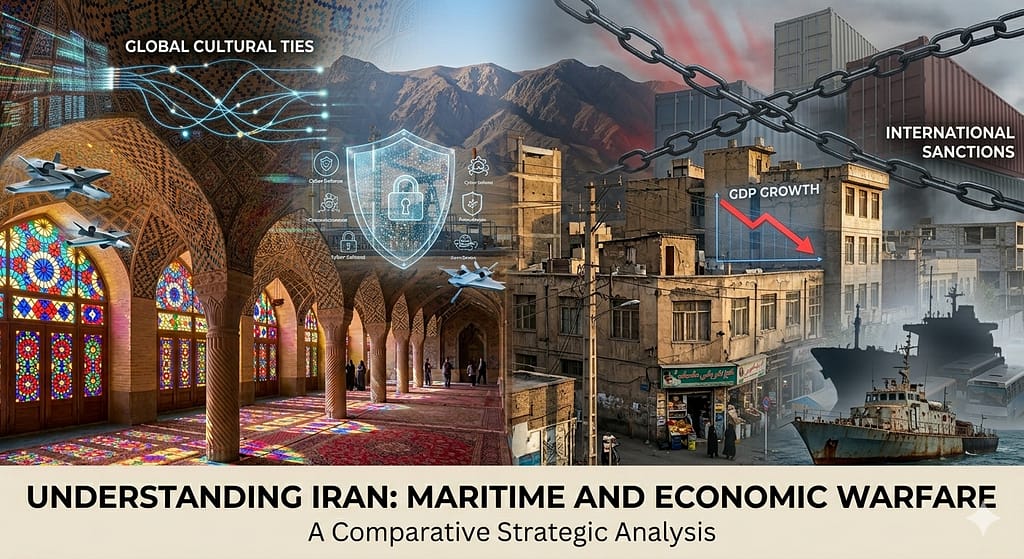
Iran’s strategy also extends to the maritime domain, particularly in the Persian Gulf and the Strait of Hormuz. The IRGC Navy specializes in unconventional naval tactics, including the use of fast attack boats, mines, and anti-ship missiles to harass larger and more advanced naval forces. (frstrategie.org)
Control over the Strait of Hormuz—through which a significant portion of the world’s oil supply passes—gives Iran a powerful economic lever. In times of conflict, Iran can disrupt global energy markets, thereby increasing the cost of military action for its adversaries. (Reuters)
This integration of military and economic pressure reflects a broader understanding of warfare as not just a battlefield contest, but a multidimensional struggle involving global markets and political will.
Information and Cyber Warfare
In recent years, Iran has expanded its strategy into the digital domain. Information warfare, including the use of social media, propaganda, and cyber operations, has become an important tool for shaping public perception and influencing political outcomes.
Iran has been reported to use coordinated online campaigns, including AI-generated content, to spread disinformation and exploit divisions within adversary societies. (The Guardian) This aspect of its strategy aims to weaken opponents from within, reducing their willingness to sustain prolonged conflicts.
Strategic Goals: Survival Over Victory
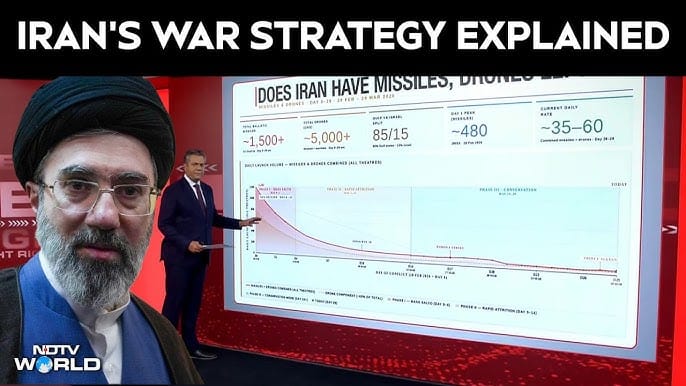
Unlike traditional military doctrines that prioritize decisive victory, Iran’s war strategy is primarily focused on survival and deterrence. The goal is not necessarily to defeat a stronger adversary outright, but to make the cost of conflict so high that it becomes unsustainable.
This approach can be described as a “long war” strategy. By prolonging conflicts, increasing economic disruption, and leveraging regional networks, Iran seeks to outlast its opponents politically and economically. Analysts often describe this as a “shadow war” characterized by ongoing, low-intensity confrontation rather than decisive battles. (Al Jazeera)
Strengths and Limitations
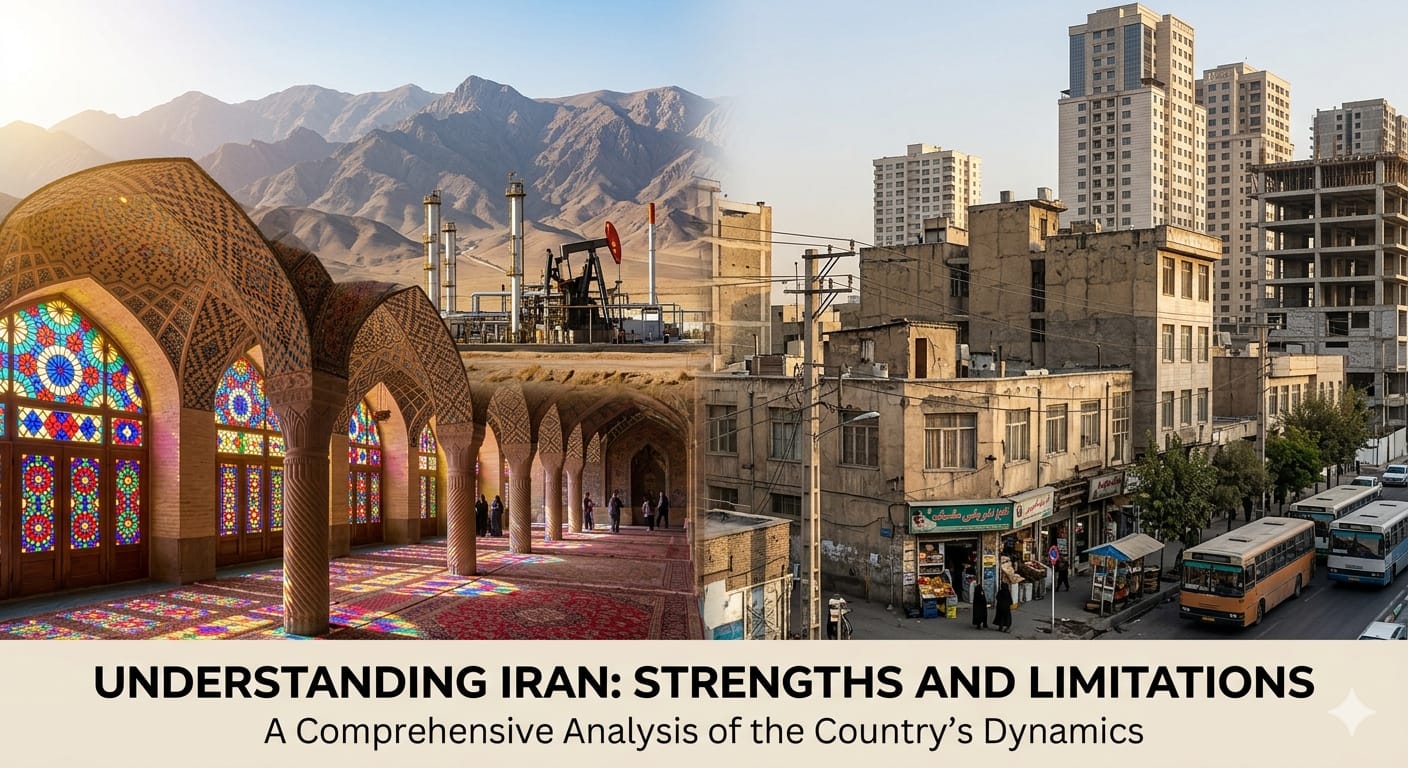
Iran’s strategy offers several advantages. It is cost-effective, flexible, and resilient. It allows Iran to compete with much stronger military powers and maintain influence across the region.
However, it also has limitations. Reliance on proxies can lead to coordination challenges and unintended escalation. Economic sanctions and internal pressures can strain Iran’s ability to sustain long-term strategies. Additionally, while asymmetric tactics are effective for deterrence and disruption, they may not be sufficient to achieve clear strategic victories.
Conclusion
Iran’s war strategy represents a sophisticated adaptation to its geopolitical realities. By embracing asymmetric warfare, decentralized command structures, proxy networks, and multidimensional tactics, Iran has developed a model of conflict that prioritizes endurance over dominance.
In an era where traditional military superiority does not guarantee victory, Iran’s approach offers a compelling example of how weaker states can challenge stronger adversaries. While controversial and often destabilizing, this strategy has proven remarkably effective in ensuring the regime’s survival and maintaining its influence in a volatile region.
Understanding Iran’s war strategy is therefore essential for analyzing current conflicts and anticipating future developments in global security. It highlights a fundamental shift in the nature of warfare—one where resilience, adaptability, and indirect power can rival, and sometimes outweigh, conventional military strength.